Why Does My Scar Look Bumpy?

Why Does My Scar Look Bumpy?

Scars that are three dimensional can be even more upsetting than the ones that lie flat on the skin. No one wants unsightly bumps and imperfections. However, it is important to know about your bumpy scars so that you can get the right kind of treatment for them. Raised scars are called hypertrophic scars; they are caused by an excess growth of collagen over the injured area. Collagen is a natural protein that occurs around elastic tissue, like skin, but when too much of it grows—especially when it grows in different directions—it can cause an unsightly scar.

Hypertrophic scars are particularly common on areas of the skin that are tightest—and in the places that people want them least! This said, choose a product that has a stable form of vitamin C and essential fatty acids (like safflower seed oil) to encourage growth of healthy collagen during scar healing and improve the elasticity of your skin. Offering your skin the nutrients it needs to heal will mean that your scars will be less bumpy as they finish healing.

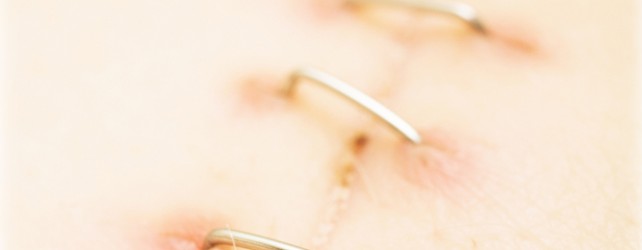
Surgical wounds are a huge cause of hypertrophic scars because the wound is deep and the healing process is very slow. Knowing this, you should prepare to help the skin heal as soon as possible. The earlier that you can start treating a scar, the better your outcome will be. Again, you will want to use gels with vitamin C and fatty acids to aid your skin, but silicone gels and silicone sheeting are also great tools for healing and shrinking scars. However, be sure that you buy silicone products that are safe and healthy for your body’s recovery. Dimethicone silicone is a tested and proven route.

Above all, speak with a health representative about the healthiest and most effective ways to decrease and prevent raised scars. Once you have found the product best suited for your scar, just continue to apply it as directed and remember to have patience as your scar heals. Stress is not good for skin!

Have you noticed your scar looking bumpy in appearance?

Subscribe to Scars and Spots to get our posts delivered directly to your inbox!

Share and Enjoy

  • Facebook
  • Twitter
  • Delicious
  • LinkedIn
  • StumbleUpon
  • Add to favorites
  • Email
  • RSS
What Can Make Scars Worse?

What Can Make Scars Worse?

Scars can worsen just from what happens in the early stages of wound healing or in the later stages when the scar is maturing.

In the early stages of healing, five factors affect how bad the scar will turn out:

  1. The type of wound, whether it has jagged edges or is a clean cut such as a surgical incision
  2. How the wound was taken care of after it happened
  3. Whether or not the wound was infected
  4. Whether or not the person is smoking in the early stages of wound healing
  5. If the wound is exposed to sun

In the later stages of healing when the wound has healed, the scar will start to mature. There are four primary influences on how the scar will end up looking:

1. Individual factors

Age plays an important role. The younger you are, the easier it is for the skin to heal itself. Scars have a greater chance to look good the younger you are when you get them.

Similarly, skin type you have also affects the way a scar heals. The darker your skin, the greater the chance there is to form hyperpigmented scars that look darker than usual. Also, the darker your skin, the more likely it is that you will form a keloid scar or a hypertrophic scar.

If you have health issues such as diabetes, rheumatoid arthritis, or lupus, the changes in the body that result from these diseases cause poorer wound healing. This could result in scars that are more prominent and look worse.

One last individual factor that affects how scars look is the smoking habit. The nicotine in cigarette smoke causes blood vessels to shrink. This decreases blood flow. When a scar gets less circulation, it doesn’t get the nutrients it needs and doesn’t heal as it should.

2. External factors

If you want to create a dark scar – one that is hyperpigmented – then make sure it gets a lot of exposure to the sun! Sun exposure first makes scars redder, and then they get darker with more and more exposure. The darker the scar is, the more visible – and uglier – it will look.

3. Allergic reactions

One of the most common allergic reactions that can happen in the area of a scar is an allergy to vitamin E. We’ve all been taught that vitamin E is important for healing but researchers discovered that many people are allergic to the topical vitamin E. Any time you have an allergic reaction, you’ll also have more inflammation. And more inflammation worsens scar healing, creating worse scars.

4. Where the scar is located

If a scar is located over a joint, then the movement of that joint will cause a scar to stretch. The result is a scar that widens over time. A wide scar is more visible than one that is thin.

Now that you know how these factors can influence scar healing and the way a scar matures, you may have have a little more control over the way your scars end up looking long term.

Even if your scar is over a year old and has matured, don’t worry, there’s still hope! With the help of the latest scar treatment technology, it’s still possible to fade scars.

Subscribe to Scars and Spots to get our posts delivered directly to your inbox!

Have you purchased InviCible Scars risk-free yet?

Share and Enjoy

  • Facebook
  • Twitter
  • Delicious
  • LinkedIn
  • StumbleUpon
  • Add to favorites
  • Email
  • RSS
How Do I Fade My Melanoma Scar?

How Do I Fade My Melanoma Scar?

Melanoma is diagnosed about 68,000 times each year in the U.S., and it’s estimated that another 48,000 people have an early form of the disease that only affects the top layer of skin. Each of these people are left with a melanoma scar after treatment.

The word ‘melanoma’ sounds pretty ominous in itself, but it’s called this because the cancer starts in the pigmented cells called melanocytes. The melanocytes are found on any skin surface; thus melanoma can occur anywhere in the body.

Because melanoma is likely to spread to other parts of the body, doctors don’t like to take any chances and will remove not only the entire growth, but also a substantial tissue around it. If the average melanoma is about the size of a pea, that can be a pretty big wound, especially if it’s on the face or other visible part of the body. Doctors at the Saarland University Hospital in Homburg, Germany at the Department of Dermatology report that the currently required safety margins for melanomas lead to extensive and profound wounds.

If you’ve already had melanoma, you have probably been wondering what to do about the melanoma scar, and how to shrink or fade a melanoma scar.

The answer is to use a scar treatments that avoid skin irritants and uses natural ingredients proven to work on reducing the redness and size of the scar. The reason why you want an all-natural formula is because you don’t want to disturb the skin cells that are remaining. By using a chemical that is a known carcinogen or possibly carcinogenic, you weaken the remaining cells and can potentially induce genetic changes within the cell’s DNA.

Cancer occurs in three steps: initiation, promotion and metastasis. Initiation is where sunlight, chemicals, radiation, viruses or tobacco change the cell’s genetic material. Step 2 is called promotion. This is when cells that have already been altered genetically are changed to form cancer cells by drugs or substances in the environment. Metastasis is where the cancer cells spread throughout the body.

Here’s a shocking fact: the medical literature is full of case studies where melanoma scars turned cancerous years after the cancer was removed. Finding out that you have cancer not once but twice is too much of a shock to the body, soul and mind.

Researchers report that genes involved in wound healing may play a role in determining melanoma scar outcome. Poorer scar outcome of melanoma scars were associated with thyroid problems and infection, among other things.

By using an all-natural scar removal formula, common sense would tell you that you decrease the risk of developing cancer in the area. Of course, you still have to change habits of sun exposure and exposing your skin to other carcinogenic compounds, but researchers believe that the skin of a scar is different than regular skin and may be more sensitive to changes from environmental influences.

Sources:

J Dtsch Dermatol Ges 2013 Mar 6 (Epub ahead of print)

Arch Dermatol Res 2012 Jul;304(5):342-51.


Share and Enjoy

  • Facebook
  • Twitter
  • Delicious
  • LinkedIn
  • StumbleUpon
  • Add to favorites
  • Email
  • RSS
Reasons Why Scars Itch

Reasons Why Scars Itch

It’s difficult to have had a wound big enough to cause a scar and get it to heal correctly. Often the first thing that we think about is what can we do to prevent any kind of scar.

But another bad thing about having a scar is that itch! What do you do when your scar is itching so badly but you’re in an important meeting? You don’t want to look like you are scratching for other reasons, like an infectious disease, an STD or lice! But if only you could get one little scratch in that area of the scab, you’ll feel relief… You’ve been there, right?

Why so much scratching and itching?

In the United Kingdom, scientists examined the skin of and around scars in mice and found that the density of four different types of nerve fibers was highest between 14 and 42 days. Three of them fell back down to normal levels by day 84 when a mature scar was seen. However, one type of fiber called the Substance P fiber stayed elevated at twice the normal number of fibers found in normal skin. This led the UK scientists on the hot trail for more explanations of why we itch.

Researchers at the University of Utah also found that there was an increase in substance P nerve fibers – of 177% – in those patients who had burn grafts. The increase correlated with the reports of pain and itching in the patients.

Scientists in China also believe that maybe Substance P is related. Substance P is a neuropeptide produced in the brain and associated with pain sensations. It’s released after an injury from the nerve endings and causes inflammation, the production of the keratinocytes and the synthesis of fibrin. Substance P also is in charge of the process whereby new blood vessels are formed to bring circulation to the wounded area.

One theory of why scars itch is that the substance that regulates Substance P, called neutral endopeptidase or NEP, which breaks down Substance P at the cell membrane level is involved. If NEP levels are depleted, there would be more inflammation than normal, and the excess activity could potentially cause itching.

All this talk about itching in scars can make your own scar itch! It’s funny how when we focus attention on something, we get more of it.

In South Korea at a burn rehabilitation unit at the Red Cross College of Nursing, 18 burn scar survivors were experiencing not only serious itching but also depression about their condition. The nurses brought in massage therapists and both the itching and depression were relieved.

And there’s something else that is known to decrease the pain – silicone sheets or gel. Silicone is effective and safe, as proven in the studies over the years.

What do you do when scars itch?

Share and Enjoy

  • Facebook
  • Twitter
  • Delicious
  • LinkedIn
  • StumbleUpon
  • Add to favorites
  • Email
  • RSS
Why Do Scars Itch?

Why Do Scars Itch?

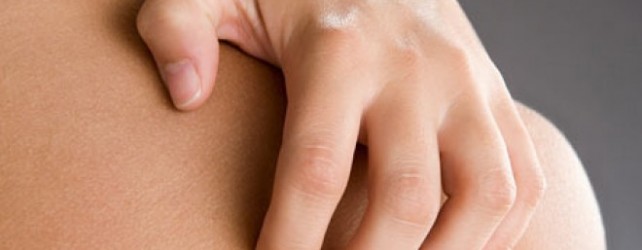
When you were young did you ever fall off your bike and end up with a big gash in your leg or around your knee? Do you remember what your mother told you besides to keep the area clean?

She probably said, “Stop scratching it. It can’t heal if you keep scratching.” Mom knew that scratching could definitely re-open the wound and even introduce bacteria into it that would cause an infection.

Why is it that scars itch?

Surprisingly, scientists only have theories on the answer. But first of all, you should know that scars that itch are a big problem in those who have been burned and in keloid scars. In fact, sometimes scientists divide people with scars into two groups for – those who have an itch on their scar six months or less after an injury that caused it (acute itch), and those who have itching more than six months after the injury (chronic itch).

Since scars can take a few years to heal, it’s conceivable that someone could have itching for the entire time! In one Texas study of 23 burn scar survivors, 87 percent had itching episodes daily.

Ninety-six percent had three or more episodes daily. And here’s the worst part – 52 percent had itching attacks that lasted up to 30 minutes each episode. Ninety-four percent reported that itching was unbearable in the chronic itch group; 86% in the acute itch group. They complained of severe burning and crawling sensations.

The good news is that as healing of the scar continued, the number of itch attacks decreased, as did the length of time the attack lasted.

In China, doctors at the Southern Medical University found a significant difference between the beta-endorphin levels found around the nerve fibers in the skin of the scar. The patients who had itch without pain or itch with pain had significantly more beta-endorphin than those without pain or itch or in the control group. The researchers are thinking that there’s some connection between beta-endorphin and itching, although they don’t know what exactly it is yet.

Beta-endorphin is the compound that your brain makes when you’re out running or exercising, listening to music, laughing or praying.

When scars were analyzed, there’s more than just beta-endorphin that can be found in the tissue. Scientists in Mexico City at a burn unit found Type 1 receptors for TNF-alpha in the blood vessels and IL-1beta in the keratinocytes and CD1a(+) cells. But like in the previous study, the scientists are still shaking their heads asking what it all means.

Itching is possibly caused by inflammation in the skin around the scar. We know this is probably true because antihistamines reduce it. But did you know that there’s a type of itch that antihistamines can’t reduce?

This tells us that there’s another part of the nervous system that is causing the nasty itch. It could result because of the activation of the opioid receptors found in the skin, reports Chinese scientists. Or maybe because itching is such a bother, the beta-endorphins are released in the skin to calm us all down!

How much itching do you experience with your scar?

Have you purchased InviCible Scars risk-free yet?

Share and Enjoy

  • Facebook
  • Twitter
  • Delicious
  • LinkedIn
  • StumbleUpon
  • Add to favorites
  • Email
  • RSS

© 2013-2015 All Rights Reserved -- Copyright notice by Blog Copyright