Neck Scar Treatment Before and After

Neck Scar Treatment Before and After

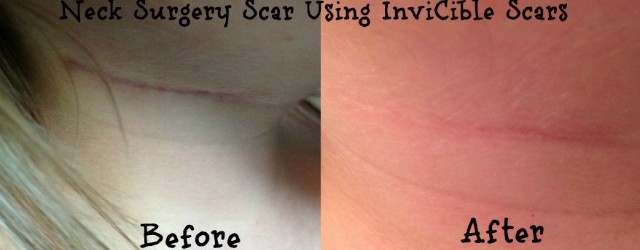
We absolutely love to hear from our customers that InviCible Scars WORKS. Our scar treatment covers a wide range of scars and isn’t just limited to acne scars or fading hyperpigmentation. Below is a testimonial from our customer, Stephanie in New Hampshire, who had a scar from neck surgery:

Neck Surgery Scar Before & After InviCible Scars Treatment

I love InviCible! It has made a very distinct surgery scar on my neck look just like one of the lines in my neck! - Stephanie, NH

We love making our customers happy and fading the scar, but not their confidence! We have plenty more scar treatment before and after photos, as well as InviCible Scars reviews that you can read.

Have you tried InviCible Scars risk-free yet?

Do you have a question about your scars? Leave a comment and we’ll be happy to answer.

Subscribe to Scars and Spots to get our posts delivered directly to your inbox!

Share and Enjoy

  • Facebook
  • Twitter
  • Delicious
  • LinkedIn
  • StumbleUpon
  • Add to favorites
  • Email
  • RSS
How to Get Rid of Liposuction Scars

How to Get Rid of Liposuction Scars

When you choose liposuction to smooth the appearance of your skin, you obviously want the most natural outcome possible. Unfortunately, the process of liposuction can and will leave behind scars. In order to minimize their appearance, and to prevent them from becoming worse than they could – or should – be, it is important for you to take proactive steps towards promoting scar healing. Though the incision site for a liposuction procedure will be smaller than that used by other procedures, it’s important to treat the site of the incisions you receive with the same care as you would the incisions left behind by any surgical procedure.

This process begins before you even head in for liposuction. Drinking plenty of water may not hydrate your skin, but it’s still important for overall health and to be as healthy as possible when heading into surgery. Likewise, ensuring that you are eating a healthy diet filled with the proper vitamins and nutrients, such as zinc and copper, can help to promote the healing of your scars through the development of the collagen required for the formation of healthy scar tissue. It’s also important to ensure that you are not smoking for at least 6 weeks prior to the procedure, as well as for 6 weeks immediately following it, as smoking can slow down the healing process and lead to worsened scars.

Ensuring that your liposuction scars heal fully and with a minimal amount of damage does not end once you have the procedure, though. It’s important to give them the proper aftercare immediately following the procedure, as well as for several weeks afterwards, until the scars themselves have begun to fade. Using a topical treatment that contains natural Vitamin C can offer you a tremendous boost to the healing of your scars. A treatment such as this will need to be used on a regular basis, as the body does not naturally store Vitamin C, so keep this in mind. Keeping the scars moisturized with a treatment such as that offered through ingredients like dimethicone silicone can also be important.

Though you might think that clothing is enough to prevent damaging exposure to the sun, remember that UV rays can travel through clothing, so making use of a sunscreen with appropriate UVA and UVB protection. It goes without saying that you should use at least an SPF 30 if you plan on heading to the beach or the pool at any time in the months following your liposuction procedure.

If you take the proper steps, you can vastly minimize the appearance of liposuction scars. Because they’re small to begin with, you can prevent them from being very noticeable at all. The important thing is to be proactive in the treatment of your liposuction scars and in the treatment process.

Do you have a question about your scar? Leave us a comment and we’ll be happy to answer.

Subscribe to Scars and Spots to get our posts delivered directly to your inbox!

Share and Enjoy

  • Facebook
  • Twitter
  • Delicious
  • LinkedIn
  • StumbleUpon
  • Add to favorites
  • Email
  • RSS
Why Do Surgical Scars Itch?

Why Do Surgical Scars Itch?

After surgery, one of the short-term and even long-term side effects that many patients have to deal with is itching at the scar site along with any pain you may be dealing with. It can be a very uncomfortable problem, one that can even affect quality of life, and although treatment may be difficult, it’s helpful to understand the process involved.

For any injury, including surgery, the healing process begins with blood clotting to form a scab. As new collagen is produced and replenished at the wound site, as well as elastin fibers, it is this portion of healing that can cause scar itching and discomfort. Itching can also come from sensation in the nerve endings that were cut or affected and from inflammation at the wound site.

Keeping the area hydrated is essential. You can do this with a body moisturizer or with a scar treatment that contains moisturizing ingredients (one with silicone works best.) A temporary, short term way to subside itching is using icepacks for short periods of time to help numb the area enough to help, although you shouldn’t keep ice on for more than about ten minutes at a time. Avoid using bar soaps, as they tend to strip the skin of natural oils, leaving the skin dry and chapped, which will increase itching.

Itching can also be an indication of infection. If you experience heat or pain along with the itching, it’s best to contact your doctor to discuss it further. An infection is not only dangerous to your health, but also contributes to a larger scar.

In general, as time goes on the itching should fade, along with any pain and the appearance of the scar. It’s a normal part of the healing process.

Have a question about your scar? Leave a comment and we’ll be happy to answer.

Subscribe to Scars and Spots to get our posts delivered directly to your inbox!

Share and Enjoy

  • Facebook
  • Twitter
  • Delicious
  • LinkedIn
  • StumbleUpon
  • Add to favorites
  • Email
  • RSS
How to Fade Cleft Lip Scars

How to Fade Cleft Lip Scars

A cleft lip is a form of lip malformation that occurs very early in pregnancy, when the baby’s facial features are just beginning to develop. The tissues that create the top lip do not come together and fuse normally. This results in an abnormal slit, or “cleft”, in the upper lip. The nostrils and tip of the nose are also usually affected.

Cleft lip deformities can affect one or both sides of the upper lip. They can also occur in conjunction with a cleft in the roof of the mouth. This is known as a cleft palate. Cleft palates can also occur in isolation.

Surgery can correct a cleft lip, but leaves behind a facial scar on the top lip and around the base of the nose that can be quite visible. Most parents are understandably very eager to fade and minimize their child’s scar after cleft lip surgery.

The fresh scar is usually red, which is normal. As any wound begins to heal, the body creates new tiny blood vessels to bring extra blood to the area to help healing. This extra blood flow can make new scars appear quite red. Unfortunately, in some cases, the scar redness continues beyond this initial healing phase. The new scar may also become raised and firm.

It can take several months before the scar begins to soften, flatten, and fade. However, with proper care, the scar can eventually become much lighter, thinner and softer.

When Will the Scar Go Away?

Unfortunately, most surgical scars are permanent so there is no way to get rid of a cleft lip scar completely. It can take a year or longer for the scar to fade, soften and look it’s best.

Some scars don’t mature well and develop into more prominent scars over time. The other issue with children is that they grow. As they grow, their facial features (and facial scars) grow too. While the amount of scarring in proportion to the facial features stays the same, the absolute size of the scar gets bigger, and potentially more visible, as children grow into adults.

Will Vitamin E Help?

Many parents prefer to use a “natural” scar treatment and choose vitamin E. However, vitamin E has not actually been shown to reliably improve scars, and may even cause skin irritation in as many as 1/3rd of users. Aloe vera is a much safer “natural” choice.

Topical silicone is the gold standard in scar care; a product that combines silicone with natural ingredients like aloe vera is the most logical (and effective) choice for most parents.

The preferred scar therapy can be started as soon as the initial wound has healed, often within just a couple of weeks after surgery, as long as this is cleared by the surgeon ahead of time.

What Can I Do to Maximize the Results?

As you wait for your scar therapy to work, there are several things you can do to ensure the best results. First and foremost, a healthy diet is essential for normal healing, something you’ll already be providing for your little one!

Keep your child’s scar out of the sun as much as possible. Sun exposure increases scar pigmentation and can make scars permanently dark or red. Use a good tear-free sunscreen every time your child goes outside. Just be sure to put the sunscreen on after the scar therapy; the scar therapy should be applied directly to the skin.

Scar massage can also really help soften firm scars but this can be very tough to do in children. Try to apply pressure to the upper lip in a circular motion for as long as your child tolerates. This helps break up scar tissue and softens firm scars. One technique is to grasp the upper lip between the thumb and index finger and then lightly squeeze the scar in a circular motion.

We encourage parents to choose a scar treatment with a proven safety profile - InviCible Scars, for instance, not only contains proven ingredients but has also won the Seal of Approval from the National Parenting Center.

Have a question about your scar? Leave a comment and we’ll be happy to answer.

Subscribe to Scars and Spots to get our posts delivered directly to your inbox!

Image credit: Children’s Hospitals and Clinics of Minnesota

Share and Enjoy

  • Facebook
  • Twitter
  • Delicious
  • LinkedIn
  • StumbleUpon
  • Add to favorites
  • Email
  • RSS
Lupus Scar Treatment Tips

Lupus Scar Treatment Tips

Lupus is a chronic autoimmune disorder in which the body’s immune system attacks its own organs and tissues. Lupus causes inflammation, which can affect a number of different body systems including the skin, joints, brain, heart, lungs, and blood cells.

Since lupus causes symptoms that can mimic those of other disorders, it can sometimes be difficult to diagnose. There is no cure for lupus, but there are treatments available that focus on relieving symptoms depending on the organ(s) involved. Even when most lupus symptoms are well-controlled, one side-effect of skin involvement often remains - scarring.

Lupus skin lesions come in a variety of forms. Once treated and healed, these lesions can leave permanent scars and dark spots, or hyperpigmentation, anywhere on the body. Lupus scars can be light, dark, or red; they can form in a wide variety of shapes, sizes, and locations depending on the underlying skin lesion that caused it.

Normal scars naturally fade and flatten over time, but if you want to improve the results as much as possible, use a scar therapy that contains silicone. Topical silicone has been clinically proven to flatten, lighten, and soften scars and is the gold standard in scar care. A scar therapy that combines the unmatched safety and benefits of silicone with other ingredients proven to fade scars that are also safe and natural – such as aloe vera and licorice extract – packs a powerful punch when it comes to fading scars as much as possible.

Keeping your scars out of the sun is an important first step, as the sun can permanently darken scars further. Read: How Does the Sun Affect Scars?

Exercise and healthy eating are also beneficial in scar healing; exercise brings more oxygen-rich blood to the scar which optimizes healing during the initial stages of wound healing. Healthy eating also ensures your body has all the necessary nutrients it needs to heal as well as possible.

Read: How Nutrition Affects Scar Healing

Work with your doctor to come up with the best treatment plan for your lupus, and use the tips above to treat the scarring that may result from skin lesions and rashes, in order to feel and look your best every day.

Have a question about your scar? Leave a comment and we’ll be happy to answer.

Subscribe to Scars and Spots to get our posts delivered directly to your inbox!

Share and Enjoy

  • Facebook
  • Twitter
  • Delicious
  • LinkedIn
  • StumbleUpon
  • Add to favorites
  • Email
  • RSS

© 2013-2015 All Rights Reserved -- Copyright notice by Blog Copyright