Scar Treatment for Cystic Acne

Scar Treatment for Cystic Acne

Contrary to popular belief, not all acne scars are caused by picking at pimples. Some acne, such as cystic acne, is prone to scarring even if you don’t touch it at all. These painful lesions trap inflammation and do not easily connect with the skin’s surface. Cystic acne is inflammatory acne which triggers a white blood cell response as the skin tries to heal itself, resulting in scars even if you keep your hands off.

Read: Different types of acne scars

So if you do get one of these pimples, how can you minimize potential scarring? The first step is to get the acne under control in the first place. For ongoing cystic acne, a prescription might be the most effective way to control or eliminate it, so don’t hesitate to see a doctor. Abrasive over the counter acne products can be irritating to your skin and may contain questionable chemicals, so talk to your doctor about which products are truly safe and effective. If you can’t see a dermatologist for any reason, make sure to keep the skin clean to avoid infection, but steer clear of abrasive or harsh products.

Once you get rid of cystic acne, how can you get rid of the mark left behind? There are several options for fading scars caused by cystic acne. For the most severe acne, a visit to a dermatologist might be in order for a chemical peel, facial scar revision, or other powerful treatments.

There are also several natural remedies that can help fade these difficult scars. Aloe vera has been shown to help speed healing and keep the scar tissue moisturized. Vitamins A and C are both effective scar healers, and can be applied to the skin or consumed in the form of foods or beverages that contain them in large amounts. Licorice is a natural and safe ingredient known to help fade scars.

Silicone is another very effective scar healer. Numerous studies have shown that it softens scars when used regularly, even hypertrophic or older scars. However, the sooner treatment is started, the better the results. A product that contains silicone along with the above mentioned natural ingredients packs a powerful punch when it comes to getting rid of cystic acne scars.

Hydroquinone is one ingredient found in many scar treatment products that you should steer clear of. Hydroquinone has been shown to be potentially dangerous, irritate the skin of some patients, cause common allergic reactions, and even cause permanent discoloration of the skin.

Keep in mind that while you are treating your acne scars, you should keep them out of the sun. Your face is frequently exposed to sunlight throughout the day, so if the scars are on your face, be sure to apply sunscreen every time you go outside, even if you are going out for only a few minutes. Sunlight can, at best, delay scar healing, and at worst, it can exacerbate scars and permanently darken them.

Acne is never fun, and when it is painful and causes scarring, it is even worse. However, you don’t have to live with unsightly acne scars. You can take a proactive stand against them and within just a few months dramatically improve the appearance of your skin.

Do you have a question about your scar? Leave us a comment and we’ll be happy to answer.

Subscribe to Scars and Spots to get our posts delivered directly to your inbox!

Share and Enjoy

  • Facebook
  • Twitter
  • Delicious
  • LinkedIn
  • StumbleUpon
  • Add to favorites
  • Email
  • RSS
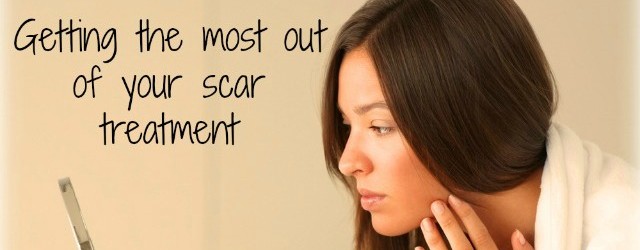
Getting the Most Out of Your Scar Treatment

Getting the Most Out of Your Scar Treatment

Finding a great scar treatment product is only half the battle. If only it were as simple as applying a gel and watching your scar vanish! The truth is that the effectiveness of any product depends partly on how you use it and many of the choices you make during treatment. You want your scar as minimally visible as possible, so be sure to follow these tips to maximize your results.

1. Choose the right product. You want a product you can trust to be safe and effective, one that does not contain any harmful ingredients or unnecessary chemicals. Look for a scar treatment with dimethicone silicone, a stable form of Vitamin C, aloe vera, licorice extract, and other ingredients that have been proven to heal scars without damaging your health.

2. Use the product consistently. Of all the things you should be doing, this is probably the most important. It is far too common for people to begin using a product and then get busy, distracted, or even discouraged if their results aren’t fast and dramatic. This can lead to using the product sporadically or stopping its use altogether before treatment is complete, which will not yield the best possible results. Use the product at least twice a day for at least 12 weeks. You may notice improvements within the first couple of weeks, but the scar will continue to improve for up to several months.

3. Apply the product first. That means under any moisturizer, sunscreen, or makeup. In order for the product to be effective, it must be applied directly to the skin. After applying, be sure to wait for it to dry before applying cosmetics or other products.

4. Boost your results with a healthy diet. Vitamin C isn’t only effective in a scar cream and applied to the skin; it also offers great scar-healing benefits when eaten, so get plenty of citrus fruits, broccoli, peppers, and other foods rich in vitamin C. Protein will help your body make the most of collagen; zinc and vitamin B both work to help your skin heal faster; Vitamin A is great for tissue synthesis.

Read: How Nutrition Affects Scar Healing

5. Avoid the sun. Even brief exposure can lead to darkening of your scar, and this change can be permanent. Especially during the first six months, when scars are still forming and changing, be sure to wear an SPF 30 sunblock, or keep the scar covered with clothing.

6. Get plenty of exercise. Exercise offers many heart and overall health benefits, improves your mood, gives you more energy, and helps you sleep better. But exercise also helps your scar heal faster! That’s because exercise improves your circulation, meaning that more oxygen-rich blood is transported to the site of your healing scar, and oxygen is key in optimal healing. If your scar is the result of a surgical incision, you may not feel much like exercise at first, but do as much as you can (and as much as your doctor gives the green light on). Even a short daily walk will go a long way to help with healing.

Do you have a question about your scar? Leave us a comment and we’ll be happy to answer.

Subscribe to Scars and Spots to get our posts delivered directly to your inbox!
Share and Enjoy

  • Facebook
  • Twitter
  • Delicious
  • LinkedIn
  • StumbleUpon
  • Add to favorites
  • Email
  • RSS
Is a Red Scar a Permanent Scar?

Is a Red Scar a Permanent Scar?

If you have a scar that appears very red, you may be wondering how long it will stay red or whether it is permanent. First of all, all scars are permanent. Some scars can be lightened and softened so much that they barely show, but scars do not disappear completely, leaving normal, healthy skin behind. Also, the redness of a scar does not tell how permanent the scar is or how much it will heal and improve in the future.

If you want an idea of how long a red scar will last (or stay red), a better question is what kind of scar it is, or why it is red. For example: Is it a keloid scar? A hypertrophic scar? Which type of acne scar is it?

Almost all new scars are red, although they tend to be redder in some people than in others. When a wound first begins to heal, a lot of scar tissue is produced. This healing process is nourished by lots of tiny blood vessels that the body produces to (temporarily) provide an extra blood supply. This causes the area to appear red.

In children, scars often get redder and redder for the first few months. The scar may be slightly raised and feel firm to the touch. In adults or children, there is typically a peak of redness within the first few months, and then the scar will become flatter, softer, and lighter in color.

Once you have a scar, you will always have it. However, a mature scar will in most cases be much less noticeable than a new scar. If your scar is red because it is new, give it some time – it’s too early to predict its final appearance. Some people heal with finer, thinner, lighter, or otherwise less obvious scars than others. It can take up to a year or more before you see the final scar.

Some quick tips to treat scars: Gently massage scar as soon as the wound has healed over (about 2 weeks), progressively becoming more aggressive as the scar matures. Old scars that are firm and raised can be massaged aggressively to break up the abnormal collagen creating the firmness. Use a scar treatment containing specific ingredients to treat redness and dark pigment such as dimethicone silicone, Vitamin C and licorice extract.

Do you have a question about your scar? Leave us a comment and we’ll be happy to answer.

Subscribe to Scars and Spots to get our posts delivered directly to your inbox!

Share and Enjoy

  • Facebook
  • Twitter
  • Delicious
  • LinkedIn
  • StumbleUpon
  • Add to favorites
  • Email
  • RSS
How Long Does it Take for a Scar to Heal?

How Long Does it Take for a Scar to Heal?

The short answer, of course, is that it depends on the scar. The correct answer is that it depends on a great many factors, including things like the person’s age and overall health, what environmental factors the scar is exposed to during healing (such as smoking or sunlight), the technique used by the surgeon if the scar is a surgical scar, and whether the wound was infected at any point during healing - to name just a few of the many things that can affect how long a scar takes to heal! It also matters what caused the scar in the first place and how extensive the injury was.

Read: How is Scar Tissue Different from Normal Tissue?

However, there are some general guidelines a patient can go by to help him or her know what to expect. For the first few weeks after a wound closes, the scar can appear red and raised; it gradually fades and softens over the next several months. Expect to see the final result in at least a year, sometimes two. That is how long it can take for a scar to stop changing or improving on its own. However, even after this point, there are methods you can utilize to encourage the scar to heal even further for a less obvious and more pleasing appearance. In children, the final appearance of the scar may not be visible for several years.

Read: Do Scars Grow With Age?

Avoid Infection
The first and most important thing you can do to help your scar heal as quickly as possible is to prevent the wound from getting infected. Any infection will delay healing and possibly worsen the scar’s final appearance. Make sure to keep the incision or injury site completely clean and follow your doctor’s instructions, if applicable, for wound care during the healing period.

Exercise, Massage the Scar Area, and Avoid Smoking
Making sure the scar gets plenty of oxygen is another effective way to make sure it heals quickly. Smoking actually works in two ways to delay scar healing. First, it decreases oxygen in the blood, which in turn decreases the amount of oxygen that gets to the wound. This oxygen is extremely important for complete healing, so you should be doing everything you possibly can to increase the wound’s oxygen supply – such as exercising. Not only does smoking reduce the amount of oxygen the wound receives – and thereby delay its healing – but it also increases the risk of the wound becoming infected. And keep the scar out of the sun; the sun can cause a scar to darken or redden.

Use Ingredients Proven to Promote Scar Healing
You can further speed scar healing by using a product designed to fade and soften scars. Avoid products that contain hydroquinone – although commonly used in scar healing, it is known to be potentially irritating and dangerous. Also avoid fragrances, preservatives, and alcohol in your scar healing product. Instead look for natural ingredients that are proven to help scars heal and improve their appearance, such as silicone, aloe vera, licorice, and vitamin C.

Be patient – scar healing is a slow process. However, you can move it along as quickly as possible by following these tips.

Have a question about your scar? Leave a comment and we’ll be happy to answer.

Subscribe to Scars and Spots to get our posts delivered directly to your inbox!

Share and Enjoy

  • Facebook
  • Twitter
  • Delicious
  • LinkedIn
  • StumbleUpon
  • Add to favorites
  • Email
  • RSS
Does Onion Extract Get Rid of Scars?

Does Onion Extract Get Rid of Scars?

Many people have scars they want to get rid of, whether the scar is new or it has been there for years. So it’s understandable that people try many different methods of scar healing. Part of the problem is that there is so much conflicting information out there that it can be hard to know what is accurate and what isn’t. Choose the wrong product, and the results will be disappointing. At best, you’ve wasted money and your scar remains unchanged; at worst, you could actually worsen your scar, damage your skin or overall health, or have an allergic reaction. This is why it’s so important to separate truth from speculation when choosing skin care products, and to choose products that are safe, natural, and known to be effective.

Many purported scar treatments on the market contain onion extract. Proponents claim that onion extract reduces redness and decreases scar size. Therefore, studies have been conducted that examine whether these beliefs are true. The results of the studies have not been favorable. In studies such as this one, where patients applied topical products to scars regularly for a set amount of time, no benefit was shown in the group using onion extract.

For starters, onion extract has not been shown to be any more effective than plain petroleum jelly. That is, not very effective at all, since neither offers any real benefit beyond moisturizing. Further, researchers have been unable to show that onion extract reduces redness or itching, or that it improves the appearance of hypertrophic or other scars. In addition, onion is acidic and could possibly even cause damage to the skin. Similarly, onion extract shows no real benefit when used on stretch marks, either.

If you want to use onion extract in your scar healing routine, you’d be better off eating it. Onions contain powerful antioxidants and have a healthy dose of vitamin C, both of which are good for scar healing. No one who wants a scar to heal should smoke, since smoking reduces oxygen in the bloodstream and therefore inhibits healing – but in patients who smoke anyway, antioxidants are especially important. Foods with antioxidant properties such as beans, berries, and many other fruits and vegetables should be part of any scar healing regimen. Onions certainly have a place in an overall nutritional strategy for improving scars, but when applied topically, the extract appears to be generally useless.

You will get much better results with a product that contains proven scar healers like dimethicone silicone. Staying out of the sun, avoiding smoking, getting enough sleep, exercising regularly, and eating a healthy diet will all work to diminish scars and improve the overall appearance of your skin. The best choice for a scar healing product is one that contains ingredients that scientific studies have proven to be effective and safe, combined with lifestyle choices that promote overall health and healing, as well as good circulation.

The verdict? Stick with these tips for the best result, and don’t bother with the onion extract.

Subscribe to Scars and Spots to get our posts delivered directly to your inbox!

Share and Enjoy

  • Facebook
  • Twitter
  • Delicious
  • LinkedIn
  • StumbleUpon
  • Add to favorites
  • Email
  • RSS

© 2013-2015 All Rights Reserved -- Copyright notice by Blog Copyright