How To: Get Rid of Dog Bite Scars

How To: Get Rid of Dog Bite Scars

In the United States alone, 4.5 million people are the victims of dog bites each year. Of these, half are children. And one out of every five dog bites is serious enough to require medical attention. In spite of that seemingly large number, keep in mind that there are over 70 million pet dogs in the US, meaning that most of them never bite people. The ones that do, however, can inflict serious injury, not to mention lasting scars.

Read: Do Scars Grow With Age?

Dog bites can be tricky to deal with, and it can be even trickier to predict what kind of scar will eventually form. All dog bites are unique; they can be on different areas of the body, often involve the face, and typically have an irregular shape, jagged edges, and non-uniform depths. This can result in a non-uniform scar, one that has uneven thicknesses and uneven colors. Dog bites can range from small puncture wounds or scratches to moderate cuts to extremely severe injuries with large areas of skin, tissue, and even bone damage.

Whether a dog bite requires medical treatment or not, the first step in minimizing scarring is preventing infection. The inflammation of infection will typically lead to delayed healing and a more visible scar once the wound finally does heal. If your doctor recommends that you take antibiotics, follow his or her instructions; this will help you avoid infection. Otherwise, be sure to keep the wound clean and covered, and consider using an antibiotic ointment as it heals.

As soon as the bite heals, begin using a scar treatment product on the area. Look for one that contains silicone, which has been proven to minimize scarring as well as help fade existing scars. Also choose a product that contains only safe and natural ingredients, such as licorice, vitamin C, and aloe vera, and does not contain dangerous chemicals like hydroquinone.

Be sure to apply the product directly to your skin. If the scar is in an area that is exposed to sunlight when you go outside, do wear a strong sunscreen, but apply it after your scar treatment has been applied and is dry. Avoid exposing your healing scar to the sun’s UV rays, as this can cause darkening or discoloration of the scar, which can be permanent. Massaging the scar, getting plenty of exercise, avoiding smoking, and eating a healthy diet rich in vitamins A and C, protein, and zinc will all help the scar heal faster and better.

Some dog bites may require scar revision. This may be an issue especially when the dog bite is on the face. Because dog bites to the face can leave wide, jagged, dark, or highly visible scars, every effort is made to minimize the scarring as much as possible. Sometimes multiple surgeries are performed. This can be an effective way to prevent a large visible scar; just remember that scar revision does leave a new scar. However, it will be much less noticeable than the original scar, and taking the steps listed above to minimize it can give you a beautiful result.

Have a question about your scar? Leave a comment and we’ll be happy to answer.

Subscribe to Scars and Spots to get our posts delivered directly to your inbox!

photo credit: evocateur via photopin cc

Share and Enjoy

  • Facebook
  • Twitter
  • Delicious
  • LinkedIn
  • StumbleUpon
  • Add to favorites
  • Email
  • RSS
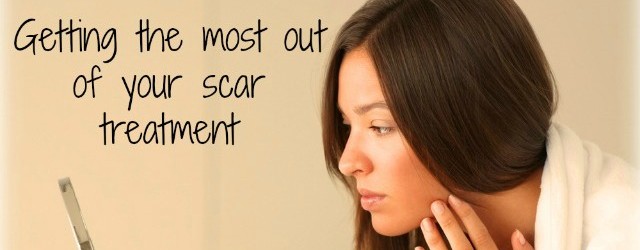
Getting the Most Out of Your Scar Treatment

Getting the Most Out of Your Scar Treatment

Finding a great scar treatment product is only half the battle. If only it were as simple as applying a gel and watching your scar vanish! The truth is that the effectiveness of any product depends partly on how you use it and many of the choices you make during treatment. You want your scar as minimally visible as possible, so be sure to follow these tips to maximize your results.

1. Choose the right product. You want a product you can trust to be safe and effective, one that does not contain any harmful ingredients or unnecessary chemicals. Look for a scar treatment with dimethicone silicone, a stable form of Vitamin C, aloe vera, licorice extract, and other ingredients that have been proven to heal scars without damaging your health.

2. Use the product consistently. Of all the things you should be doing, this is probably the most important. It is far too common for people to begin using a product and then get busy, distracted, or even discouraged if their results aren’t fast and dramatic. This can lead to using the product sporadically or stopping its use altogether before treatment is complete, which will not yield the best possible results. Use the product at least twice a day for at least 12 weeks. You may notice improvements within the first couple of weeks, but the scar will continue to improve for up to several months.

3. Apply the product first. That means under any moisturizer, sunscreen, or makeup. In order for the product to be effective, it must be applied directly to the skin. After applying, be sure to wait for it to dry before applying cosmetics or other products.

4. Boost your results with a healthy diet. Vitamin C isn’t only effective in a scar cream and applied to the skin; it also offers great scar-healing benefits when eaten, so get plenty of citrus fruits, broccoli, peppers, and other foods rich in vitamin C. Protein will help your body make the most of collagen; zinc and vitamin B both work to help your skin heal faster; Vitamin A is great for tissue synthesis.

Read: How Nutrition Affects Scar Healing

5. Avoid the sun. Even brief exposure can lead to darkening of your scar, and this change can be permanent. Especially during the first six months, when scars are still forming and changing, be sure to wear an SPF 30 sunblock, or keep the scar covered with clothing.

6. Get plenty of exercise. Exercise offers many heart and overall health benefits, improves your mood, gives you more energy, and helps you sleep better. But exercise also helps your scar heal faster! That’s because exercise improves your circulation, meaning that more oxygen-rich blood is transported to the site of your healing scar, and oxygen is key in optimal healing. If your scar is the result of a surgical incision, you may not feel much like exercise at first, but do as much as you can (and as much as your doctor gives the green light on). Even a short daily walk will go a long way to help with healing.

Do you have a question about your scar? Leave us a comment and we’ll be happy to answer.

Subscribe to Scars and Spots to get our posts delivered directly to your inbox!

Share and Enjoy

  • Facebook
  • Twitter
  • Delicious
  • LinkedIn
  • StumbleUpon
  • Add to favorites
  • Email
  • RSS
Is a Red Scar a Permanent Scar?

Is a Red Scar a Permanent Scar?

If you have a scar that appears very red, you may be wondering how long it will stay red or whether it is permanent. First of all, all scars are permanent. Some scars can be lightened and softened so much that they barely show, but scars do not disappear completely, leaving normal, healthy skin behind. Also, the redness of a scar does not tell how permanent the scar is or how much it will heal and improve in the future.

If you want an idea of how long a red scar will last (or stay red), a better question is what kind of scar it is, or why it is red. For example: Is it a keloid scar? A hypertrophic scar? Which type of acne scar is it?

Almost all new scars are red, although they tend to be redder in some people than in others. When a wound first begins to heal, a lot of scar tissue is produced. This healing process is nourished by lots of tiny blood vessels that the body produces to (temporarily) provide an extra blood supply. This causes the area to appear red.

In children, scars often get redder and redder for the first few months. The scar may be slightly raised and feel firm to the touch. In adults or children, there is typically a peak of redness within the first few months, and then the scar will become flatter, softer, and lighter in color.

Once you have a scar, you will always have it. However, a mature scar will in most cases be much less noticeable than a new scar. If your scar is red because it is new, give it some time – it’s too early to predict its final appearance. Some people heal with finer, thinner, lighter, or otherwise less obvious scars than others. It can take up to a year or more before you see the final scar.

Some quick tips to treat scars: Gently massage scar as soon as the wound has healed over (about 2 weeks), progressively becoming more aggressive as the scar matures. Old scars that are firm and raised can be massaged aggressively to break up the abnormal collagen creating the firmness. Use a scar treatment containing specific ingredients to treat redness and dark pigment such as dimethicone silicone, Vitamin C and licorice extract.

Do you have a question about your scar? Leave us a comment and we’ll be happy to answer.

Subscribe to Scars and Spots to get our posts delivered directly to your inbox!

Share and Enjoy

  • Facebook
  • Twitter
  • Delicious
  • LinkedIn
  • StumbleUpon
  • Add to favorites
  • Email
  • RSS
How Long Does it Take for a Scar to Heal?

How Long Does it Take for a Scar to Heal?

The short answer, of course, is that it depends on the scar. The correct answer is that it depends on a great many factors, including things like the person’s age and overall health, what environmental factors the scar is exposed to during healing (such as smoking or sunlight), the technique used by the surgeon if the scar is a surgical scar, and whether the wound was infected at any point during healing - to name just a few of the many things that can affect how long a scar takes to heal! It also matters what caused the scar in the first place and how extensive the injury was.

Read: How is Scar Tissue Different from Normal Tissue?

However, there are some general guidelines a patient can go by to help him or her know what to expect. For the first few weeks after a wound closes, the scar can appear red and raised; it gradually fades and softens over the next several months. Expect to see the final result in at least a year, sometimes two. That is how long it can take for a scar to stop changing or improving on its own. However, even after this point, there are methods you can utilize to encourage the scar to heal even further for a less obvious and more pleasing appearance. In children, the final appearance of the scar may not be visible for several years.

Read: Do Scars Grow With Age?

Avoid Infection
The first and most important thing you can do to help your scar heal as quickly as possible is to prevent the wound from getting infected. Any infection will delay healing and possibly worsen the scar’s final appearance. Make sure to keep the incision or injury site completely clean and follow your doctor’s instructions, if applicable, for wound care during the healing period.

Exercise, Massage the Scar Area, and Avoid Smoking
Making sure the scar gets plenty of oxygen is another effective way to make sure it heals quickly. Smoking actually works in two ways to delay scar healing. First, it decreases oxygen in the blood, which in turn decreases the amount of oxygen that gets to the wound. This oxygen is extremely important for complete healing, so you should be doing everything you possibly can to increase the wound’s oxygen supply – such as exercising. Not only does smoking reduce the amount of oxygen the wound receives – and thereby delay its healing – but it also increases the risk of the wound becoming infected. And keep the scar out of the sun; the sun can cause a scar to darken or redden.

Use Ingredients Proven to Promote Scar Healing
You can further speed scar healing by using a product designed to fade and soften scars. Avoid products that contain hydroquinone – although commonly used in scar healing, it is known to be potentially irritating and dangerous. Also avoid fragrances, preservatives, and alcohol in your scar healing product. Instead look for natural ingredients that are proven to help scars heal and improve their appearance, such as silicone, aloe vera, licorice, and vitamin C.

Be patient – scar healing is a slow process. However, you can move it along as quickly as possible by following these tips.

Have a question about your scar? Leave a comment and we’ll be happy to answer.

Subscribe to Scars and Spots to get our posts delivered directly to your inbox!

Share and Enjoy

  • Facebook
  • Twitter
  • Delicious
  • LinkedIn
  • StumbleUpon
  • Add to favorites
  • Email
  • RSS
Dangers of Using Hydroquinone to Fade Scars and Hyperpigmentation

Dangers of Using Hydroquinone to Fade Scars and Hyperpigmentation

Hydroquinone has made quite a name for itself around the world in skin lightening creams and scar treatment products. What many people may not realize is that hydroquinone is a harsh chemical that exposes you to many dangers.

Hydroquinone is a chemical that inhibits melanin, which is what gives your skin its color. Areas of the skin that have become darker than the surrounding skin – from sun exposure, freckles, acne, or melasma, for example – are often treated with products containing hydroquinone by well-intentioned and hopeful people. Unfortunately, hydroquinone is associated with many health risks, and many people end up disappointed with its results, or worse.

Toxicity
One major problem is that hydroquinone is known to be quite toxic in high concentrations. It is believed by experts to have carcinogenic properties, and it is known to contain mercury, which can cause liver damage as well as other health problems. Other side effects of hydroquinone can include nausea, ringing of the ears, cyanosis, and seizures.

Ochronosis
Ochronosis, a disfiguring skin condition characterized by thickening and discoloration, is believed to be caused by hydroquinone use in some cases, and the chemical has also been implicated in cases of increased pigmentation. That means that using hydroquinone could very well yield the opposite of the effect you are hoping for – darkening and worsening of your scar or dark spot rather than lightening and fading. The highest risk of ochronosis is found in people with darker skin tones.

Photosensitivity
Hydroquinone can also cause increased photosensitivity, meaning that it can make your skin more sensitive to sunlight. Using hydroquinone on skin that is already sunburned or otherwise irritated can worsen the condition; also, prolonged sun exposure while using hydroquinone can result in severe sunburn. Besides the pain and health risks associated with sunburn, it can also worsen the appearance of scars, sometimes permanently.

Allergic Reactions
Many people who use hydroquinone also have allergic reactions to the chemical. Severe burning, stinging, tingling sensations, hives, trouble with breathing, and throat and mouth swelling have all been reported by hydroquinone users. The appearance of any of these symptoms when using hydroquinone should be considered a medical emergency and evaluated by a doctor at once.

Some countries have banned hydroquinone altogether, citing worries over its safety. Even in the United States, where it is currently legal at limited concentrations, the FDA admits that it cannot be ruled out as a carcinogen and is considering a ban on hydroquinone in over-the-counter preparations because of the safety concerns. Because of all of the health risks of using hydroquinone, in addition to the fact that it may actually worsen, rather than improve, your skin condition, hydroquinone is not recommended for use on scars or dark spots. Instead, choose products containing ingredients that are known to be both safe and effective, such as dimethicone silicone to improve the appearance of your scar, and licorice extract and Vitamin C to fade the dark coloring. Also incorporate healthy and natural lifestyle changes that help your skin heal and your scars fade, such as eating a healthy diet, and getting plenty of exercise and sleep.

Do you have a question about your scars? Leave a comment and we’ll be happy to help.

Subscribe to Scars and Spots to get our posts delivered directly to your inbox!

Share and Enjoy

  • Facebook
  • Twitter
  • Delicious
  • LinkedIn
  • StumbleUpon
  • Add to favorites
  • Email
  • RSS

© 2013-2015 All Rights Reserved -- Copyright notice by Blog Copyright