
Skin Changes During Pregnancy

Skin Changes During Pregnancy

One of the common side effects of pregnancy is your skin’s reaction to the unfamiliar hormones flooding your system. Some of these are pleasant, such as the “glow” many pregnant women enjoy. Unfortunately, more of them are unpleasant for pregnant women; symptoms commonly experienced by pregnant women include everything from stretch marks and skin tags to acne and melasma.

Acne
Some pregnant women are lucky enough to enjoy a decrease in acne and clear, glowing skin. Some unlucky women, however, experience an increase in acne or even acne when and where they have never had it before. This type of acne usually disappears after delivery, when hormones gradually return to normal. But acne scars and dark marks can remain, and can be distressing for the woman.

Melasma
Pregnancy can cause an increase in skin pigmentation in certain areas of the body, even the face, as seen with melasma. Women who are not pregnant as well as (rarely) men can also experience melasma, but it is by far more commonly seen in pregnant women. Melasma causes a patchy tan or brown discoloration of the facial skin, typically on the cheeks, upper lip, chin, and forehead. Sun exposure can worsen melasma. People with darker skin tones have a greater risk of developing melasma during their pregnancies.

What to Avoid During and After Pregnancy
Depending on the type of skin change you experience, there are different methods for minimizing the appearance of the change and restoring your skin to its original state. However, whether you are dealing with melasma, acne, or even a cut or scrape unrelated to your pregnancy, you want to be sure to choose products and techniques that are safe for use during pregnancy.

That means avoiding:

  • Vitamin E: Studies do not show that vitamin E improves scars, and it can also cause skin irritation.
  • Hydroquinone: Although it does lighten scars, hydroquinone can also cause permanent skin discoloration, delayed healing, and skin irritation. It has also been suspected of causing some types of cancer, and has been banned in certain countries.
  • Kojic Acid: Kojic acid can cause increased skin sensitivity, potentially resulting in allergic contact dermatitis.
  • Additives such as fragrances and preservatives: Depending on the specific agent used, these can cause skin irritation.

How to Treat Skin Changes during Pregnancy
Instead, focus on treatment methods that involve natural and safe ingredients, such as licorice extract and vitamin C, to lighten scars, melasma, and acne marks during pregnancy. You can also maximize your results by drinking plenty of water, which benefits overall health, eating a healthy diet, avoiding the sun, and getting plenty of (doctor-approved) exercise. Exercise improves oxygen-rich blood circulation and contributes to the healing process; walking is a great exercise that most pregnant women can do daily. If you are already accustomed to more strenuous exercise, ask your doctor about continuing your normal routine during your pregnancy; it’s safe in many cases.

Do you have a question about your scar? Leave us a comment and we’ll be happy to answer.

Subscribe to Scars and Spots to get our posts delivered directly to your inbox!

Please follow and like us:
error
5 Best Ways to Prevent Scars

5 Best Ways to Prevent Scars

Depending on the type of wound you have, preventing a noticeable scar altogether may not be possible. However, for some minor wounds, following the steps below may prevent a permanent scar from being more noticeable. And if your wound is more severe, these same steps can significantly lessen its final appearance.

Preventing Infection
Infection of a wound is directly related to the severity of the eventual scar. That’s because some bacteria produce toxins or other byproducts that destroy tissue, exacerbating the severity of the wound. In addition, the skin’s inflammatory response to infection also creates a worse scar. Keeping any wound extremely clean and preventing infection is a great way to prevent or minimize scarring.

Read: Tips for Healing Scars

Optimal Nutrition
A healthy diet full of a variety of nutrients is important for overall health as well as scar healing. Certain nutrients are particularly helpful in the healing process. Protein foods such as meats, beans, and nuts help the body create collagen. Foods rich in zinc like beef, yogurt, peas, and black beans reduce inflammation and speed healing. Vitamins A, B, and C help with different aspects of healing such as collagen production, inflammation prevention, and the growth of new blood vessels. Eat plenty of fruits and vegetables as well as meat, eggs, fish, and whole grains to make sure you are consuming enough of these important vitamins.

Read: How Nutrition Affects Scar Healing?

Exercising
Exercise is important for anyone who wants to minimize a scar. Exercise promotes great blood circulation, which brings more healing oxygen to the site of your scar. Oxygen helps prevent infection, promotes healing, and minimizes scars. Remember to exercise as regularly as possible for the best results. If all you are able to do is walk, then walk; even this will help with scar healing. You can also try different types of exercise such as swimming, yoga, the increasingly popular boot camp fitness classes, or anything that is fun and gets you moving.

Not Smoking
The importance of oxygen in the scar healing process is also a reason why you should not smoke. Smoking comes with a whole host of health dangers, and scar healing is one of them. By constricting blood vessels and decreasing the amount of oxygen that can get to the scar, smoking delays healing, increases your chance of infection, and deplete your vitamin C levels, which your body already cannot store or create on its own. All of this contributes to a scar that takes longer to heal and is more unsightly than it has to be.

Read: How Does Smoking Affect Scar Healing?

The Right Scar Treatment
The right scar treatment can make all the difference in the final appearance of your scar. Choose one with vitamin C, which promotes collagen production, leading to better and faster healing and fading hyperpigmentation. Silicone is another important component of a good scar treatment. Silicone has been clinically proven to soften and flatten scars. Aloe vera, linoleic acid, oleic acid, and licorice extract are also safe and effective ingredients to look for. Avoid onion extract and vitamin E, which are ineffective, and hydroquinone, preservatives, parabens, and fragrances, which can cause allergic reactions and can worsen scars.

Have a question about your scar? Leave a comment and we’ll be happy to answer.

Subscribe to Scars and Spots to get our posts delivered directly to your inbox!

Please follow and like us:
error
Getting the Most Out of Your Scar Treatment

Getting the Most Out of Your Scar Treatment

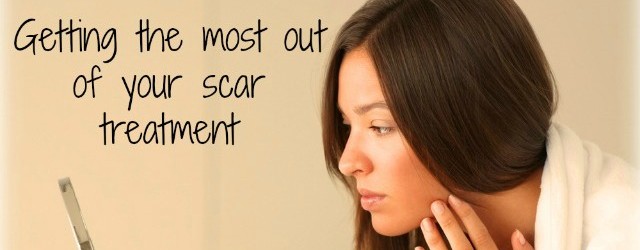
Finding a great scar treatment product is only half the battle. If only it were as simple as applying a gel and watching your scar vanish! The truth is that the effectiveness of any product depends partly on how you use it and many of the choices you make during treatment. You want your scar as minimally visible as possible, so be sure to follow these tips to maximize your results.

1. Choose the right product. You want a product you can trust to be safe and effective, one that does not contain any harmful ingredients or unnecessary chemicals. Look for a scar treatment with dimethicone silicone, a stable form of Vitamin C, aloe vera, licorice extract, and other ingredients that have been proven to heal scars without damaging your health.

2. Use the product consistently. Of all the things you should be doing, this is probably the most important. It is far too common for people to begin using a product and then get busy, distracted, or even discouraged if their results aren’t fast and dramatic. This can lead to using the product sporadically or stopping its use altogether before treatment is complete, which will not yield the best possible results. Use the product at least twice a day for at least 12 weeks. You may notice improvements within the first couple of weeks, but the scar will continue to improve for up to several months.

3. Apply the product first. That means under any moisturizer, sunscreen, or makeup. In order for the product to be effective, it must be applied directly to the skin. After applying, be sure to wait for it to dry before applying cosmetics or other products.

4. Boost your results with a healthy diet. Vitamin C isn’t only effective in a scar cream and applied to the skin; it also offers great scar-healing benefits when eaten, so get plenty of citrus fruits, broccoli, peppers, and other foods rich in vitamin C. Protein will help your body make the most of collagen; zinc and vitamin B both work to help your skin heal faster; Vitamin A is great for tissue synthesis.

Read: How Nutrition Affects Scar Healing

5. Avoid the sun. Even brief exposure can lead to darkening of your scar, and this change can be permanent. Especially during the first six months, when scars are still forming and changing, be sure to wear an SPF 30 sunblock, or keep the scar covered with clothing.

6. Get plenty of exercise. Exercise offers many heart and overall health benefits, improves your mood, gives you more energy, and helps you sleep better. But exercise also helps your scar heal faster! That’s because exercise improves your circulation, meaning that more oxygen-rich blood is transported to the site of your healing scar, and oxygen is key in optimal healing. If your scar is the result of a surgical incision, you may not feel much like exercise at first, but do as much as you can (and as much as your doctor gives the green light on). Even a short daily walk will go a long way to help with healing.

Do you have a question about your scar? Leave us a comment and we’ll be happy to answer.

Subscribe to Scars and Spots to get our posts delivered directly to your inbox!
Please follow and like us:
error
Does Onion Extract Get Rid of Scars?

Does Onion Extract Get Rid of Scars?

Many people have scars they want to get rid of, whether the scar is new or it has been there for years. So it’s understandable that people try many different methods of scar healing. Part of the problem is that there is so much conflicting information out there that it can be hard to know what is accurate and what isn’t. Choose the wrong product, and the results will be disappointing. At best, you’ve wasted money and your scar remains unchanged; at worst, you could actually worsen your scar, damage your skin or overall health, or have an allergic reaction. This is why it’s so important to separate truth from speculation when choosing skin care products, and to choose products that are safe, natural, and known to be effective.

Many purported scar treatments on the market contain onion extract. Proponents claim that onion extract reduces redness and decreases scar size. Therefore, studies have been conducted that examine whether these beliefs are true. The results of the studies have not been favorable. In studies such as this one, where patients applied topical products to scars regularly for a set amount of time, no benefit was shown in the group using onion extract.

For starters, onion extract has not been shown to be any more effective than plain petroleum jelly. That is, not very effective at all, since neither offers any real benefit beyond moisturizing. Further, researchers have been unable to show that onion extract reduces redness or itching, or that it improves the appearance of hypertrophic or other scars. In addition, onion is acidic and could possibly even cause damage to the skin. Similarly, onion extract shows no real benefit when used on stretch marks, either.

If you want to use onion extract in your scar healing routine, you’d be better off eating it. Onions contain powerful antioxidants and have a healthy dose of vitamin C, both of which are good for scar healing. No one who wants a scar to heal should smoke, since smoking reduces oxygen in the bloodstream and therefore inhibits healing – but in patients who smoke anyway, antioxidants are especially important. Foods with antioxidant properties such as beans, berries, and many other fruits and vegetables should be part of any scar healing regimen. Onions certainly have a place in an overall nutritional strategy for improving scars, but when applied topically, the extract appears to be generally useless.

You will get much better results with a product that contains proven scar healers like dimethicone silicone. Staying out of the sun, avoiding smoking, getting enough sleep, exercising regularly, and eating a healthy diet will all work to diminish scars and improve the overall appearance of your skin. The best choice for a scar healing product is one that contains ingredients that scientific studies have proven to be effective and safe, combined with lifestyle choices that promote overall health and healing, as well as good circulation.

The verdict? Stick with these tips for the best result, and don’t bother with the onion extract.

Subscribe to Scars and Spots to get our posts delivered directly to your inbox!

Please follow and like us:
error
Does Petroleum Jelly Help Fade Scars?

Does Petroleum Jelly Help Fade Scars?

First discovered about two hundred years ago, petroleum jelly has been widely used as an ointment for only about half that time. It was first used as a treatment for skin injuries, although it has since been used for a wide range of skin problems. Petroleum jelly is a semi-solid mixture of hydrocarbons. It is flammable and has a melting point of around 37 degrees Celsius. It is translucent and pale yellow. It generally does not have any taste or smell. It is also hydrophobic, meaning that it repels water, and it is not soluble in water.

Petroleum jelly has been used widely in the field of medicine for the purpose of attempting to heal scars. It does appear to have some beneficial healing properties. For example, it prevents other fluids or contaminants from entering a wound, so it protects the wound from bacteria and infection. This is one way it can help prevent severe scarring, as infection can result in worse scars. Additionally, by keeping the wound moist, it inhibits the formation of thick scabs, which is good because scabs delay the healing process.

However, it is important to realize that the healing benefits of petroleum jelly are only effective on fresh wounds and cuts, and it has no effect on older scars. While it may work to minimize scarring in the first place, it will not reduce, improve, or minimize the appearance of old scars.

Petroleum jelly is thought to be beneficial in many types of applications. For example, it can soothe chapped lips, soften dry skin, and protect the skin from hair dyes or other chemicals. It can also be gently massaged into the feet before going to bed to get rid of cracks and tough, dry skin.

Unfortunately, in spite of its many potential benefits, scar healing does not appear to be among them. Any perceived benefit gained from using petroleum jelly on an older scar is likely just the temporary effect of keeping the scar moisturized. Even in the case of fresh cuts or wounds, its abilities are limited, as it cannot be used on deep or severe wounds. If you are unsure about whether petroleum jelly is safe to use on a cut or other skin injury, ask your doctor.

As far as healing an older scar is concerned, a product with more than just moisturizing properties is required. Moisture is an important component of scar healing, but so are collagen regulation, oxygen circulation, and optimal nutrition – and clearly, petroleum jelly provides none of these. A better choice is a product that contains a mixture of ingredients known to bring about significant improvement in the appearance and texture of scars, such as dimethicone silicone, licorice, and certain vitamins. A healthy diet and regular exercise also go a long way toward healing scars.

Moisture alone cannot heal scars the way many other proven ingredients and methods can, so if you are serious about improving your scars, your best bet is a product designed to do just that.

Do you have a question about your scars? Leave a comment and we’ll be happy to answer.

Subscribe to Scars and Spots to get our posts delivered directly to your inbox!

Please follow and like us:
error